
Africa’s only university admissions consulting team of Ivy League students with 152 million in funding – and counting!
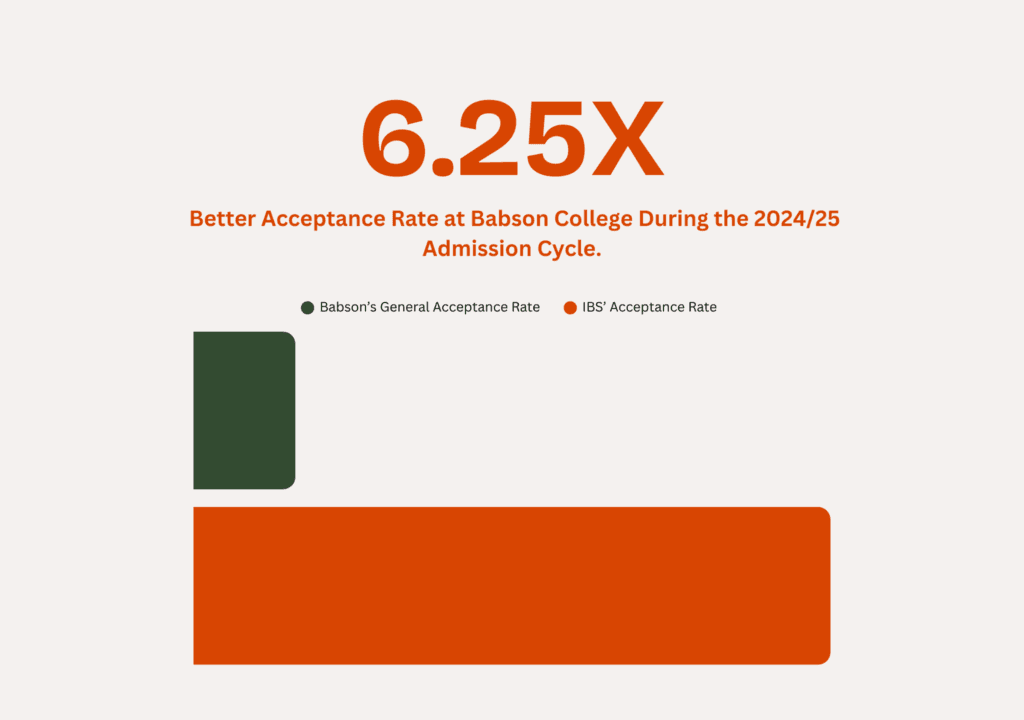
Beyond grades, Babson values applicants who demonstrate leadership, creativity, strong writing, and sustained involvement in activities or work, especially when that involvement shows an entrepreneurial mindset: taking initiative, acting under uncertainty, and creating economic and social value.
All clients at Ivey Bridge Scholars got offers in the 2024/25 cycle.
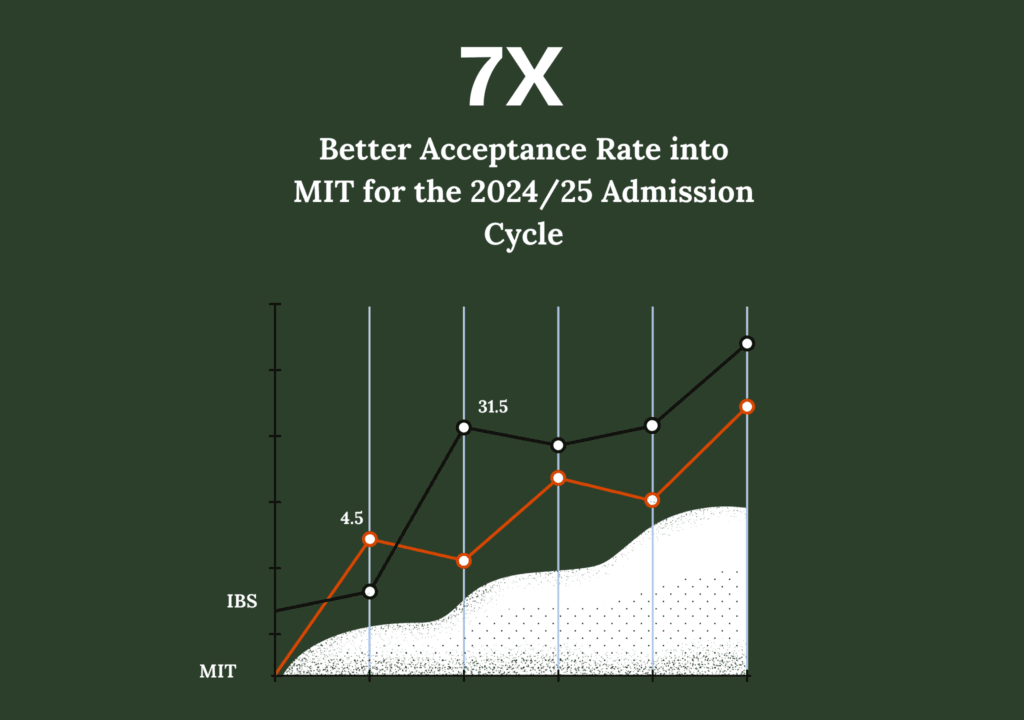
MIT looks for students who are academically prepared for an intense curriculum, but theirselection is driven by the match between the applicant and the Institute, not grades alone.
Offers in the 2024/25 Cycle.
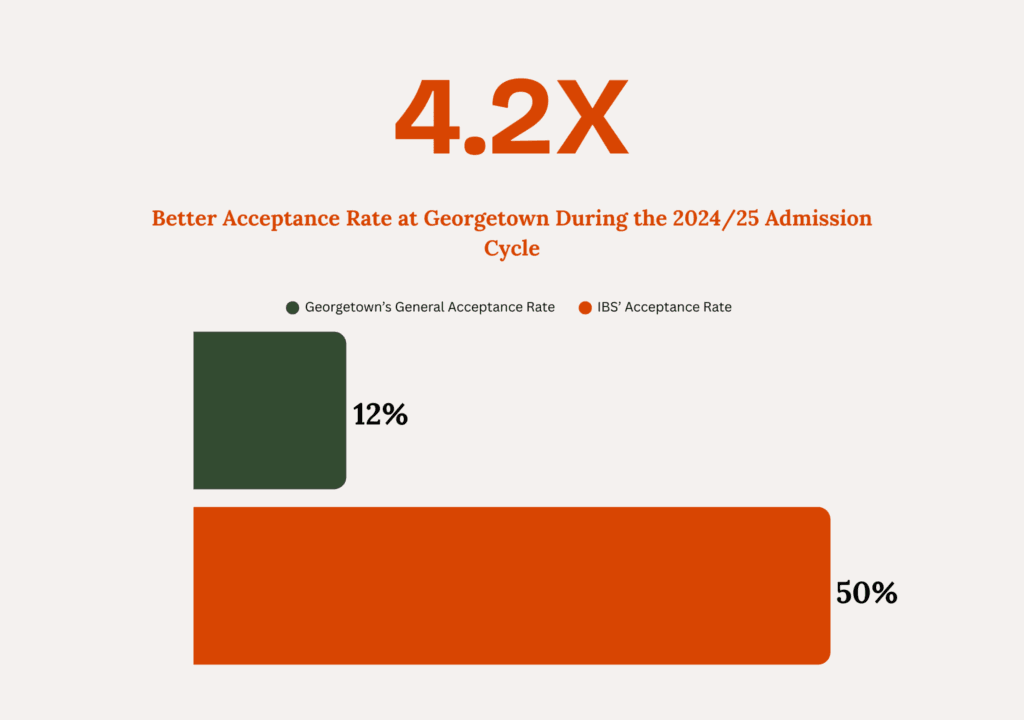
Georgetown prioritizes strong academic performance and looks closely at what you do beyond the classroom: meaningful accomplishments, commitment to the broader community, and personal qualities like resiliency, motivation, and ambition.
Offers in the 2024/25 Cycle.
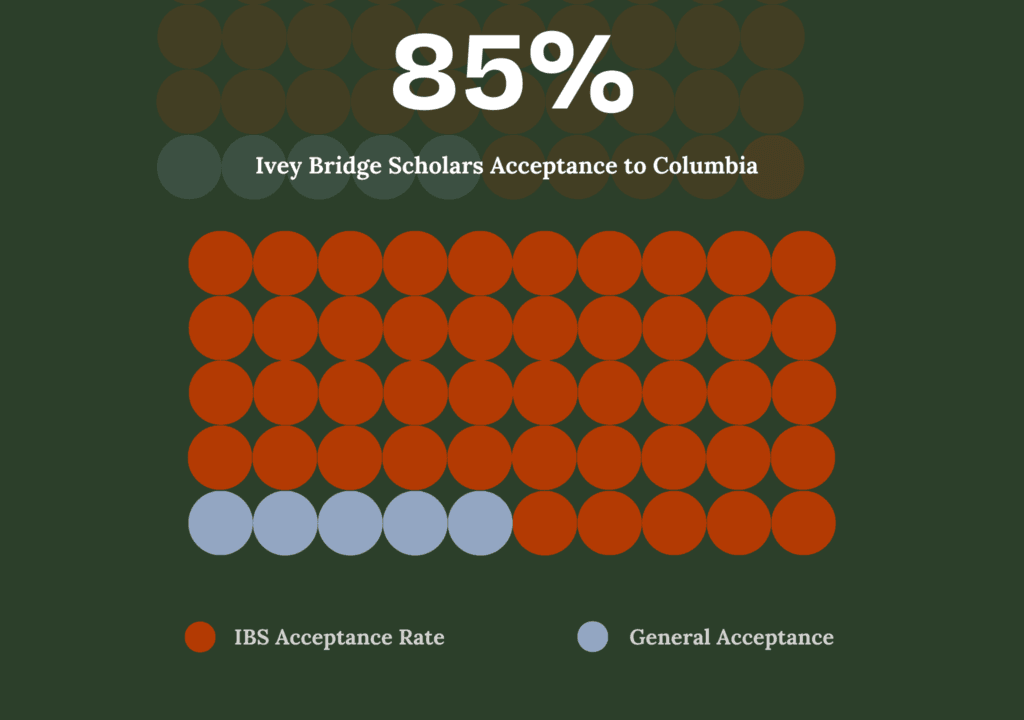
Columbia’s admissions committee emphasizes academic potential, intellectual strength, and the ability to think independently within a holistic review.
Offers in the 2024/25 Cycle.
MIT looks for students who are academically prepared for an intense curriculum, but theirselection is driven by the match between the applicant and the Institute, not grades alone.
Offers in the 2024/25 Cycle.
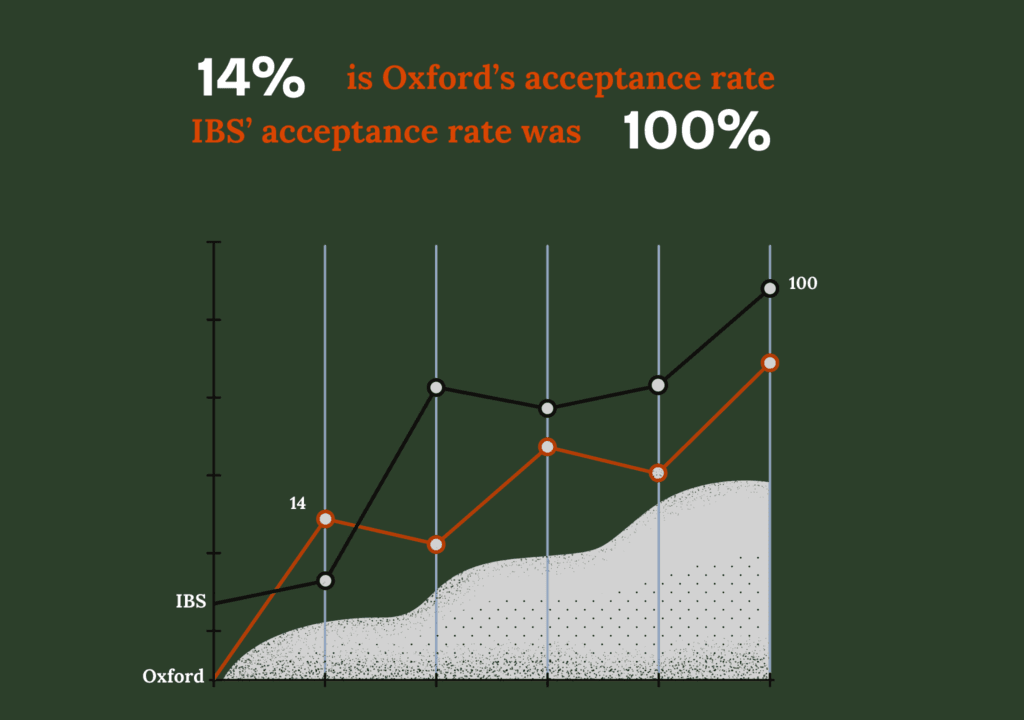
IBS clients are, on average, 6.5x more likely to get accepted to an Ivy League university or top 20 university than the average applicant.
| College | General Admit Rate | IBS Admit Rate | Advantage Factor |
|---|---|---|---|
Yale University |
4.6% |
50% |
10.8x |
MIT |
5% |
38% |
7.6x |
UC Berkeley |
11% |
50% |
4.5x |
INSEAD |
30% |
75% |
2.5x |
Imperial College |
14% |
100% |
7.1x |
Columbia |
4.2% |
85% |
20.2x |
Warwick |
13% |
100% |
7.7x |
McGill University |
46% |
90% |
2x |
Yale |
6.9% |
45% |
6.5x |
Johns Hopkins |
6% |
65% |
10.8x |






At IBS, leadership means personal ownership of every student’s outcome. Founder Shamima Nyamekye built Ivey Bridge Scholars to give African applicants elite admissions strategy and funding insight, and she remains closely involved in positioning and narrative standards. CEO Nigel Amankwaah, a practicing cardiologist trained at the University of Pennsylvania, sets a rigorous bar for evidence, fit, and execution. Sales Director Shaukia leads client onboarding and growth, ensuring families enter the process with clarity, urgency, and aligned expectations. Chief Admissions Oiicer Esther Lee oversees admissions strategy and quality control, guiding each application to a cohesive, committee-ready finish.
The Vision
George Junior Duku had a dream that extended far beyond his own career. Watching Ghana’s limited capital markets while the NYSE traded trillions daily, he saw an opportunity to transform his country’s financial infrastructure. With a first-class honors degree from Ashesi University, eight Dean’s List appearances, FMVA certification, and prestigious internships at Ecobank, Unilever Ghana, and Stanbic Investment Management Services, George had the credentials. What he needed was the right graduate program to turn his local expertise into global impact.
How We Made It Happen
Many consultants would have simply helped George list his achievements. We did something different.
We built a strategic narrative: We didn’t just show Windsor that George was accomplished—we showed them why he was inevitable. Every internship became evidence of purposeful preparation. His shift from finance to marketing at Unilever wasn’t a detour; it was proof of adaptability. His dissertation solving cash flow problems wasn’t just academic work; it was a preview of the financial systems he’d build for Ghana.
We created alignment that felt effortless. We identified Professor Dr. Nancy Ursel’s research in corporate finance and investment banking, then positioned George as someone who would contribute to that work while advancing his own mission. We matched his goals with Windsor’s experiential learning model and courses like Finance in a Global Perspective—not as boxes to check, but as essential tools for his vision.
We turned potential red flags into strengths. Fresh graduate? We framed his four strategic internships as evidence that he’d been building toward this moment since year two. Limited time since undergrad? We showed how his FMVA certification and $300 million portfolio analysis at Stanbic demonstrated he was already operating at graduate-level competency.
The Outcome
Accepted to University of Windsor’s Master of Management – International Accounting and Finance.
The Vision
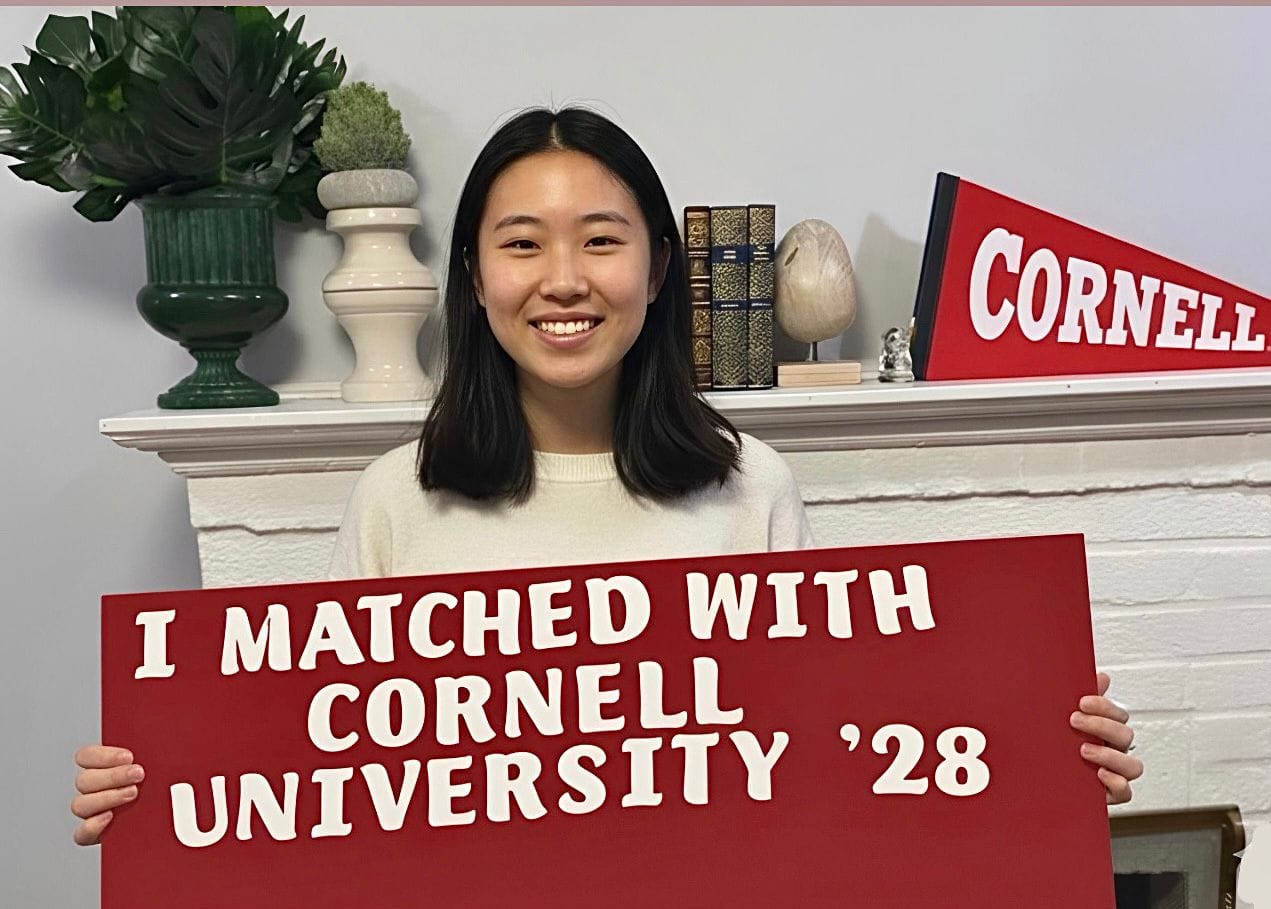
Charlotte S. was not trying to be well-rounded. She was trying to be undeniable. A builder at heart, she turned math, physics, and coding into tools her community could use. Her flagship build, ColdChain Guardian, was a low-cost cold chain monitoring system that tracked fridge and freezer temperatures and sent SMS alerts when conditions became unsafe. Stanford, Dartmouth, Cornell, and Illinois Tech were the right ecosystems for a student who ships real engineering work.
How We Made It Happen
We positioned Charlotte as a maker with momentum, not a high achieving student with activities. Her application followed one through line: identify a problem, prototype a solution, test it, improve it, and teach others to build too.
We turned her extracurriculars into proof. ColdChain Guardian was framed as systems engineering: sensor hardware, automated data logging, a simple dashboard, and alert logic builtaround real failure conditions. What mattered was iteration, field testing, and documented impact, not a one-time prototype.
We made leadership tangible. Instead of titles, we highlighted infrastructure: a beginner-friendly build curriculum, workshops on circuits and programming, and mentoring that helped younger students take ownership of projects.
We built school-specific fit without flattery: Stanford for invention and scale, Dartmouth for human centered problem solving, Cornell for engineering rigor and research, and Illinois Tech for applied innovation and outcomes.
The Outcome
Admitted to Stanford, Dartmouth, Cornell, and Illinois Tech, with $170,000 in combined funding. A 4.0 was not the differentiator. Proof was.
The Vision
Oliver set out to become the kind of lawyer who can operate where modern commerce is headed: cross-border deals, digital payments, and the regulatory gaps that show up when technology moves faster than enforcement. Trained in Ghana’s legal system and shaped by years of corporate legal work, he built an early specialization in business law by working on complex restructuring support, contract drafting, due diligence, and regulatory advisory. His academic foundation reinforced that direction through research on the regulation of mobile money transactions in Ghana and what it means for banks, telecom operators, and consumer protection.
How We Made It Happen
We positioned his profile as internationally scalable, not locally limited. Admissions readers see many lawyers with general practice exposure. We made Oliver’s file show a tight theme: business transactions, payment systems, data and consumer protection, and dispute resolution as commerce globalizes.
We reframed his work experience as advanced commercial training. His in-house counsel exposure, contract negotiation, and multi jurisdiction support across African entities was written as proof he already thinks in cross border risk, stakeholder alignment, and regulatory strategy, the exact competencies LLM programs reward.
We made his research do heavy lifting. The mobile money regulation thesis was not treated as a school project. It became evidence of analytical depth, comfort with financial regulation, and the ability to produce publishable-quality reasoning in a fast-evolving area of law.
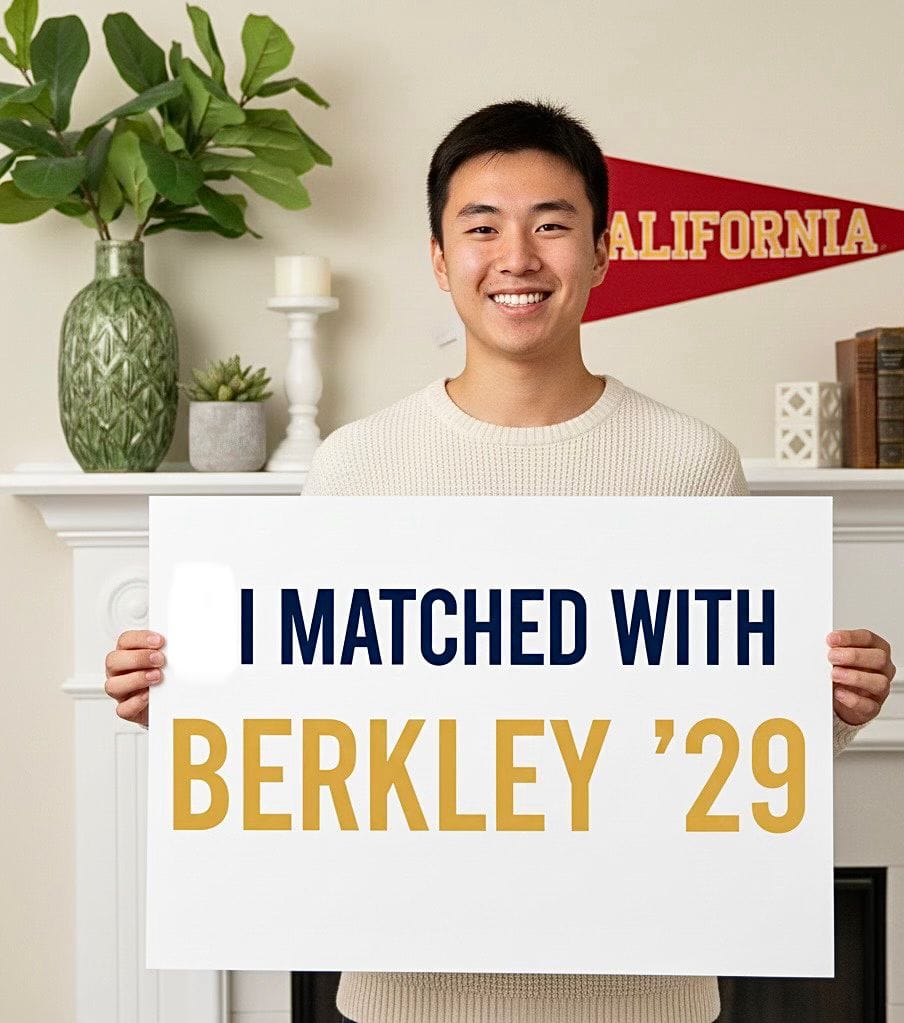
We built school fit as a strategic match. Fordham was positioned for its strength in business law in New York’s commercial ecosystem. Berkeley was positioned for the intersection of law, technology, and policy, aligning with Oliver’s long-term focus on enforceability, regulation, and cross-border commerce in the digital era.
The Outcome
Accepted to Fordham and Berkeley for a master’s in law.
The Vision
Karikari Achireko Kwagyan witnessed Ghana’s energy crisis from the inside. As an electrical engineer at Ghana GRIDCo and the Electricity Company of Ghana, he watched power cuts cripple businesses while 61% of the nation’s energy came from fossil fuels. With a first-class honors degree from KNUST and five years at Ghana’s major power companies, Karikari had the technical expertise. To decarbonize Ghana’s grid at scale, he needed MIT’s Technology and Policy Program—where engineering meets policy influence.
How We Made It Happen
We reframed his profile entirely. MIT TPP doesn’t want engineers who understand policy— they want engineers who will shape it. We positioned Karikari as already operating at that intersection: writing to Ghana’s Energy Commission Chairman proposing collaboration, competing in MIT’s own Policy Hackathon on environmental justice, serving as peer reviewer for Ghana’s Institution of Engineering Journal. Not a student hoping to learn policy—an engineer already working in the policy space who needed MIT’s tools to scale his impact.
We emphasized his holistic nature. Five years at transmission and distribution companies, frontline grid experience, peer-reviewed journal contributions, undergraduate thesis on islanding operations that previewed his MIT research. We showed MIT a candidate already working at graduate-level complexity.
We proved he’d already succeeded there. His MIT Policy Hackathon participation wasn’t an extracurricular—it was evidence he could thrive in TPP’s collaborative, interdisciplinary environment before even enrolling.
The Outcome
Accepted to MIT’s Technology and Policy Program.
The Vision
Victor managed a $4.6 million revenue portfolio at Europe’s largest cargo hub with three degrees and award-winning bioeconomy research. To pivot into supply chain consulting and reshape global logistics with sustainability at the core, he needed Miami Herbert’s MBA—but had one complication: a failed student accommodation startup called HOSTELMATE.
How We Made It Happen
We made his failure his greatest asset. Most candidates bury failed ventures. We made HOSTELMATE the centerpiece—showing a founder who conducted market research, negotiated with 27 facility owners, achieved 200 bookings, then learned “a gap in a market doesn’t guarantee a market in that gap.” Miami Herbert doesn’t want perfect records; they want entrepreneurs who extract wisdom from setbacks.
We made him their diversity mission personified. Victor wasn’t another international student—he was an Asian student with a concrete plan: drive Black entrepreneurship through uStart and mobilizing funding with faculty advisor Susana Alvarez for minority founders.
We proved he’d already succeeded at their level. Startup coach improving funding rates 30%, operations analyst driving 98% utilization, team leader with 94% placement success across three continents. Not a student seeking training—a professional ready to scale existing impact.
The Outcome
Accepted to Miami Herbert Business School with $146,000 in funding.
The Vision
Karen Ewurabena Amoo-Mensah led production improvements at Nestle Ghana, but optimizing existing systems wasn’t enough. With a first-class honors degree from KNUST (top 3%), research on biomass energy and water desalination, and a 20% production increasefrom redesigning cooling systems, she’d proven she could make processes work better. She wanted to reimagine them entirely pioneering sustainable manufacturing for Africa. That required Houston’s PhD in Chemical Engineering.
How We Made It Happen
We showed PhD-level impact, not potential. Karen wasn’t seeking training—she was seeking research infrastructure to scale solutions she’d already proven, leading plant-wide improvements at Nestle, applying lean methodologies for nationwide business cases, designing a 7-step pectin extraction process with ChemCAD prototyping.
We made industry her advantage. PhD programs often see industry candidates as less research focused. We showed Houston a candidate who understood how theoretical principles scale to industrial reality, something most PhD students lack. Her cooling system work wasn’t just an internship; it was applied research with measurable results.
We created an unforgettable framework. Chemical engineering programs get countless strong applicants. We made Karen memorable by framing everything through one lens: science is only as important as the difference it achieves in people’s lives. Water desalination for rural communities, biofuel for Ghanaian households, reduced manufacturing emissions—every project served her humanitarian mission.
The Outcome
Accepted to the University of Houston’s PhD Program in Chemical Engineering.
The Vision
Zoe graduated with First Class honors in Accounting and built early credibility in high stakes finance execution at ARM Investment Managers, where she handled complex regulatory compliance requests and delivered precise reporting under pressure. Alongside her corporate track, she doubled down on impact through financial literacy work that helped students learn investing and drove measurable growth in platform sign-ups. Her goal was simple: earn elite US finance training, break into fintech finance, and scale long term financial empowerment for African women.
How We Made It Happen
We reframed compliance as investor-grade finance readiness. Many applicants describe compliance as administrative. We showed it as risk intelligence, stakeholder management, and accuracy at scale, the exact foundations of modern finance roles.
We made her literacy work proof of leadership and market insight. Instead of treating it as volunteering, we positioned it as product and growth exposure—teaching finance, understanding real user behavior, and producing measurable outcomes.
We built a coherent narrative across every document. Her Babson prompts connected short term fintech goals to a long-term mission, while showing maturity through a grounded Plan B. Her NYU endorsement validated execution quality, leadership, and trustworthiness in regulated environments.
The Outcome
Accepted to Babson College and New York University, positioned as a finance candidate with proof, leadership, and a clear trajectory from regulated markets to fintech impact.
The Vision
Estela grew up in Mozambique watching foreign aid trap the Global South in poverty cycles.
At 12, she launched a literacy program for 1,000+ children. She founded a start-up empowering women across 30 communities. She trained youth from 17 Latin American countries, fluent in Portuguese, English, and Spanish. To dismantle structural barriers to equitable development, she needed Josef Korbel’s Master’s in International Development.
How We Made It Happen
We made lived experience non-negotiable expertise. Development programs get applicants who’ve studied poverty. We showed Korbel someone who’d lived it and built solutions from within it. Victoria wasn’t theorizing about Global South challenges; she was a primary source.
We targeted the Pardee Fellowship specifically. We laser-focused on Professor Haider A. Khan’s research on global political economy, then connected Estela’s data-driven policymaking goals directly to Pardee’s International Futures modeling platform. Not general admission but we positioned her as essential to their research agenda.
We made three languages a strategic advantage. Portuguese, English, and Spanish weren’t cultural flavors—they were proof she could bridge the exact regions (Latin America and Africa) where Korbel concentrates. Her Westminster research on cross-cultural competence became evidence she’d already been studying what Korbel teaches.
The Outcome
Accepted to the Josef Korbel School with the Pardee Research Fellowship.
The Vision
Theresa Asiedu Gyamfi watched extremist groups like Boko Haram exploit digital spaces for radicalization across Africa. With a first-class honors degree, ISC2 certification, and experience deploying protections that reduced breaches by 95%, she could secure infrastructure. But to address Africa’s cyberterrorism at the policy level—where external aid misaligns with African priorities—she needed Columbia SIPA’s MIA in Technology and Innovation Policy.
How We Made It Happen
We made Africa’s vulnerability her unique authority. SIPA gets cybersecurity applicants. We showed them someone who understood the intersection of African democratic transitions, extremist digital adaptation, and over-reliance on external solutions. Her CyberChampion4Change Foundation training 5,000+ women and children wasn’t charity—it was frontline defense research.
We connected her to three specific professors. Tamar Mitts (digital radicalization), Maria Ressa (digital authoritarianism), Camille François (information warfare)—showing how each mapped to her African cyberterrorism research. Not general interest; positioned to advance their specific programs.
We framed her as institution-builder. Her goal wasn’t a job—it was establishing a research institute for African digital security policy, working with the African Union’s A4C to develop homegrown strategies. SIPA admitted someone thinking institutionally.
The Outcome
Accepted to Columbia SIPA’s Master of International Affairs program.
The Vision
Kumi A. Kyeremeh set out to move from frontline respiratory care to doctoral research that protects the workers who build Ghana’s economy. Backed by an MPhil in Human Physiology, clinical expertise in pulmonary diagnostics, and research on neuropathy and lung function in Type 2 diabetes, he targeted Wayne State’s PhD in Physiology to study neural control of respiration and translate that science into better occupational respiratory health outcomes.
How We Made It Happen
We positioned his clinical work as applied science. Ventilator management, neonatal respiratory training across facilities, and measurable improvements in outcomes became proof of technical depth and systems thinking, not just experience.
We made his research the backbone of the story. The 402-participant study, spirometry methods, and statistical modelling were framed as evidence he can handle PhD level rigor and produce publishable insights.
We used mentorship to validate excellence. His recommender anchored the narrative with concrete impact, including staff training at scale and improved neonatal outcomes, giving the committee external proof of performance.
The Outcome
Accepted to Wayne State University’s PhD in Physiology, positioned to scale his research from hospital level interventions to population level occupational respiratory health impact.
The Vision
Araba Maison’s goal coming to the USA was to secure a top MBA program. She came to us with a clear thesis: With long standing interests in inclusion, literacy, and investing, she had already founded Kaya Care Foundation to advance women’s financial empowerment and was actively building technical credibility through an ESG Investing course with the CFA Institute. Post MBA, her path was direct: Big 4 ESG consulting, then a pivot into responsible investing, then scaling Kaya Care into a specialized financial institution that backs sustainable women owned enterprises across Ghana and Africa.
How We Made It Happen
We positioned her story as a strategy narrative, not an ambition statement. Many MBA applicants say they want to do sustainability. We made Araba’s application prove she understood why ESG matters now, how it changes corporate governance, and how her career plan connects consulting, investing, and institution building into one coherent track.
We made Kaya Care Foundation the credibility anchor. Instead of listing it as a good deed, we framed it as early evidence of her long-term investment thesis: empowering women financially is not charity, it is an economic strategy that can be scaled through responsible capital.
We tied her fit to Washington, DC with real intent. GWU was not just a brand choice. We leveraged her focus on global finance and ESG to highlight proximity to institutions like the World Bank and IMF and the advantage of learning and networking in the center of policy and capital.
We turned her background into a future ready toolkit. Her investment banking and risk management experience became proof she can operate at the intersection of capital allocation, governance, and impact, exactly where ESG leaders are built.
The Outcome
Accepted to George Washington University MBA with a $100,000 Forte Fellowship.
The Vision
Kendi understood what most business owners miss: quality products don’t sell themselves—marketing does. With a Sociology and Linguistics degree from University of Ghana, she’d studied how language shapes consumer behavior. She’d marketed digital products at Ecobank, built a 1,000+ follower community as a brand influencer for UK Brands Ghana (driving 15% sales increase), and launched Hairsthetics Wig making—a registered business thriving on her marketing instincts alone. To formalize her intuitive understanding of consumer behavior into strategic expertise, she needed Drexel’s master’s in marketing.
How We Made It Happen
We reframed Sociology and Linguistics as marketing foundations. Most liberal arts graduates apologize for non-business degrees. We showed Drexel that Kendi’s academic training was ideal for marketing and that Sociology taught her to investigate social habits and audience preferences. Additionally, Linguistics taught her how communication drives purchasing decisions.
We made her business ownership proof of concept. Hairsthetics Wig making wasn’t a side hustle. Rather, it was evidence she could acquire customers “beyond expectations” using only marketing knowledge. Combined with her Ecobank digital product sales and brand influencing results, we showed Drexel someone who’d already succeeded at what their program teaches.
We positioned her for specific faculty. We connected Kendi’s interest in consumer data to Associate Dean Feit’s research on leveraging incomplete data for marketing decisions. Not generic program interest, but we showed she had researched their faculty and knew exactly whose work she wanted to advance.
The Outcome
Accepted to Drexel University’s Master’s in Marketing program.
The Vision
Maame Ama Obeng reduced production time by 20% at FanMilk PLC through process optimization and quality control. With a Food Science degree from KNUST and research on antioxidant-rich juice mixes, she understood food processing science. But as Production Supervisor managing machinery inspections and safety compliance, she had hit a ceiling. To advance food safety and quality assurance at scale, especially for a young Ghanaian woman in a male-dominated manufacturing sector, she needed Western University’s Master of Engineering in Food Processing.
How We Made It Happen
We positioned industry experience as research-ready expertise. Engineering programs often see industry candidates as less academic. We showed Western that Maame Ama’s production floor work was applied research: her published paper “The Evaluation of Fanyogo Mix Loss at FanMilk PLC” used critical thinking and data analysis to solve real manufacturing challenges. Not leaving industry for academia—bringing industry problems that needed engineering solutions.
We made her quality control work proof of an engineering mindset. Monitoring CUTE sheets, implementing ISO standard procedures, conducting machinery inspections, streamlining problem
identification—we reframed these as engineering systems thinking in action. Her 20% efficiency improvement wasn’t just good management; it was process engineering.
We leveraged her GhAFoST involvement strategically. Active participation in Ghana’s Association of Food Science and Technology wasn’t networking; it was evidence she engaged with cutting-edge developments and contributed professional expertise. We showed Western a candidate already operating within the academic-industry ecosystem they value.
The Outcome
Accepted to Western University’s Master of Engineering in Food Processing.
Want us to review your profile before slots close? Message us on WhatsApp and we will tell you which schools make sense per your admission goals.